
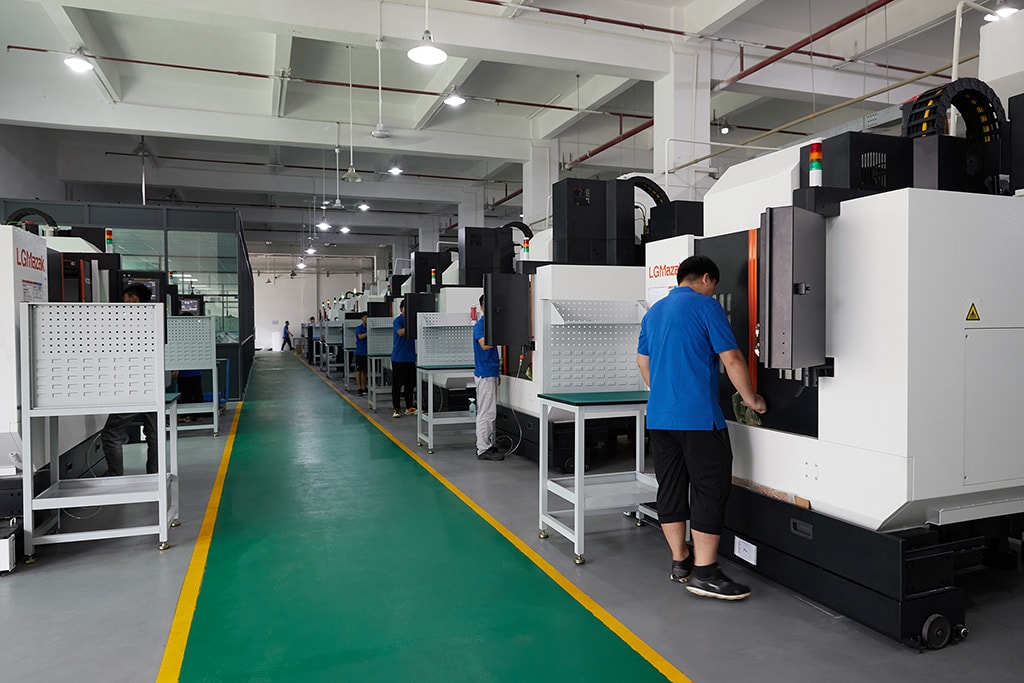
- 6,800 m² facility in Hengli Town, Dongguan, with 100+ employees, 80%+ of them skilled technicians.
- 100+ production machines and 20+ inspection instruments, including Hexagon CMMs.
- Founded 2005, with a founder carrying 28 years of industry experience.
- ISO 9001, IATF 16949, ISO 14001 — with honest scope stated.
Who is behind High Precision Machining?
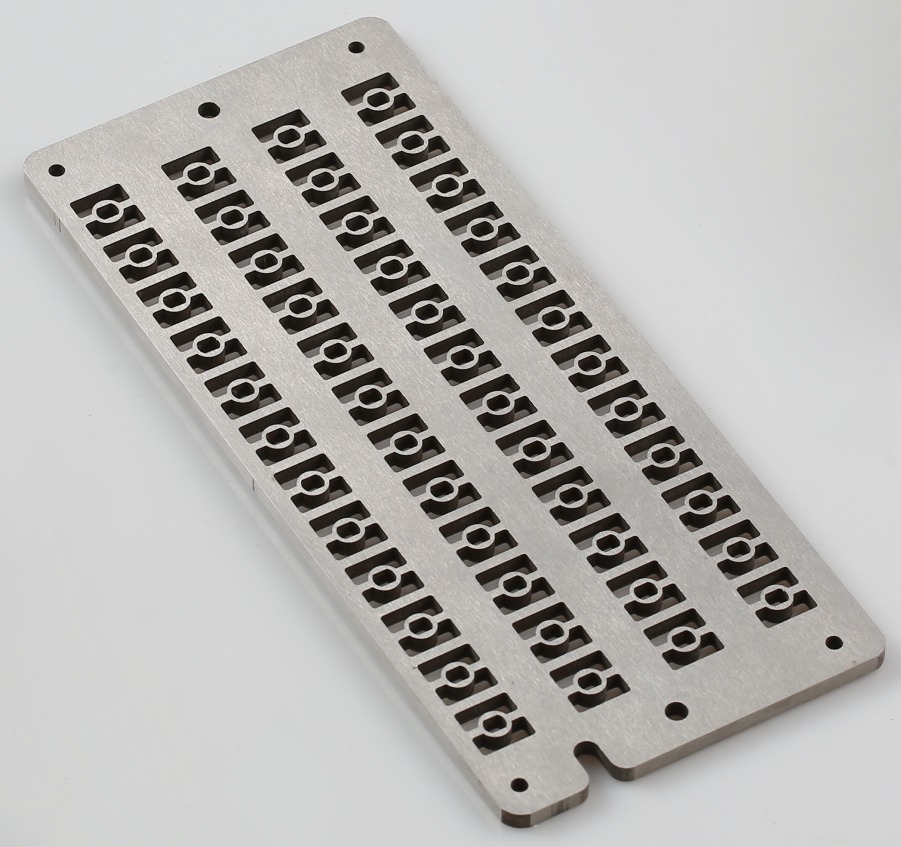
The legal entity is Dongguan Zhuohang Ltd, and the brand that appears on the work is Zhuohang Precision Machining Factory. The company was founded in 2005 and has grown from a small machining operation into a 6,800 m² precision manufacturing facility in Hengli Town, Dongguan — part of the Pearl River Delta, the densest precision-manufacturing region in the world.
The team is the quieter half of the capability story. Of 100+ employees, 80%+ are skilled technicians, and the founder carries 28 years of industry experience. Precision machining is not a machine problem so much as a people problem — the discipline to hold a tolerance every day, not once — and that discipline is what the staffing reflects.
That staffing ratio matters more than a headcount number. A machine can be bought, but the person who knows when a tool is wearing, when the temperature in the room has drifted, and when a fixture needs re-tramming cannot be bought off a shelf, that knowledge is accumulated shift by shift. A shop staffed mostly with technicians, rather than with operators who only load and unload, is a shop where the tolerance is being actively held rather than passively hoped for. It is also the difference between a shop that catches a drifting dimension at the machine and one that catches it at final inspection, after the batch is already scrap.
What does the factory floor actually contain?
A capability claim is only as good as the machine list behind it. The floor is stated in counts and models, not adjectives, because you should be able to verify what is claimed.
| Category | Count | What it runs |
|---|---|---|
| 3-axis milling centers | 50+ | Prismatic parts, housings, brackets, plates |
| 4-axis milling centers | 20+ | Multi-face parts in fewer setups |
| 5-axis milling centers | 20+ | Complex, compound-angle geometry |
| CNC lathes | 25+ | Shafts, pins, bushings, round parts |
| Precision grinders | 7+ | Surface, centerless, cylindrical to ±0.002 mm |
| Inspection instruments | 20+ | Hexagon CMMs, vision, hardness, coating, material |
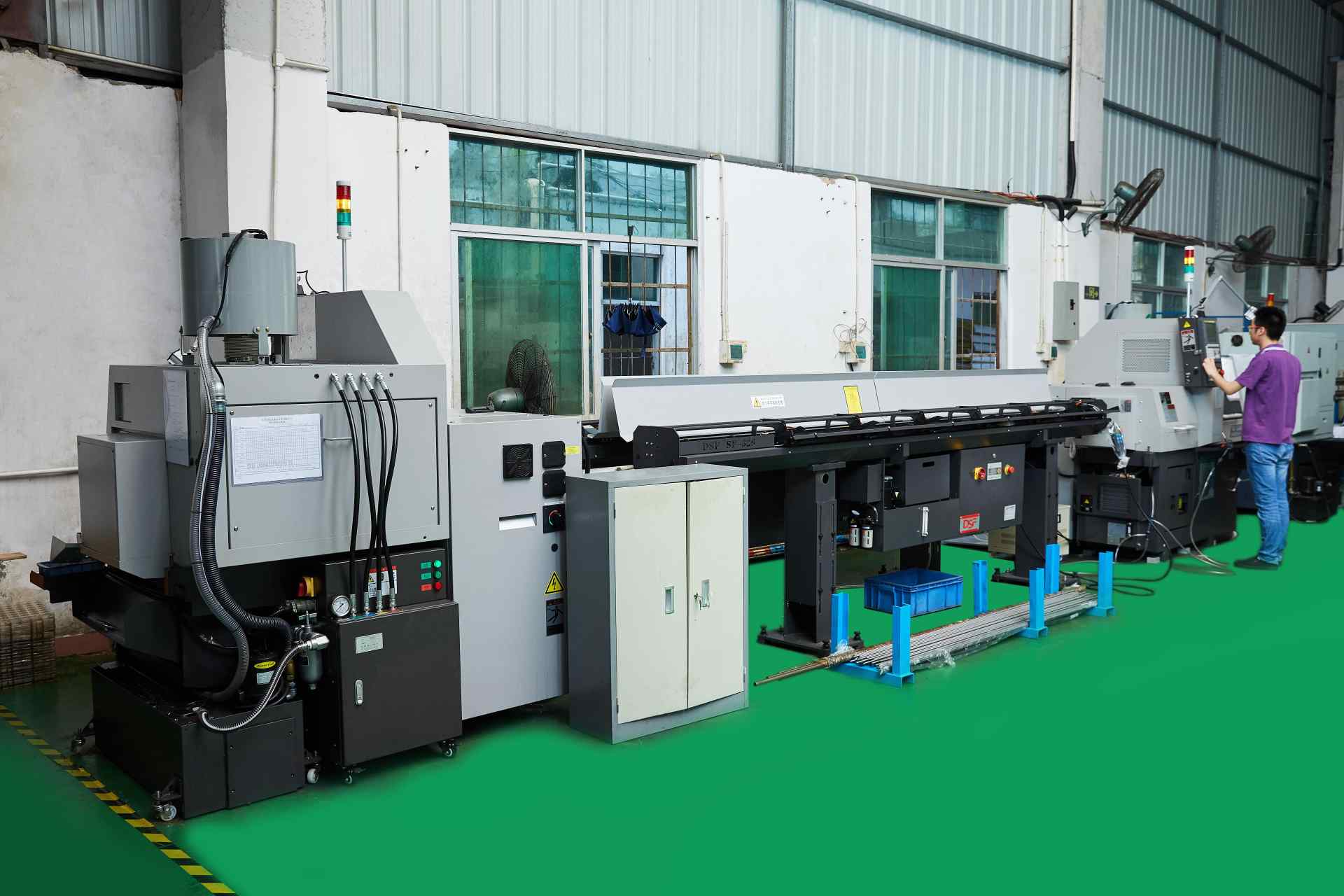
Across the machining families, the shop runs Brother and Mazak-class vertical machining centers, Mazak multi-tasking and 5-axis machines, and Citizen, Star, and Tsugami Swiss-type lathes — the kind of equipment that supports single-setup work and the tight relative positions it protects.
Why name the brands? Because a machine brand is a stand-in for repeatability, and repeatability is the physical limit on every tolerance the shop quotes. A Brother-class machining center and a Citizen or Star Swiss-type lathe are built around thermal stability and rigid, predictable motion — the two properties that let a machine hold a band day after day instead of on a single good morning. The brand is not decoration on a capability sheet; it is your shorthand for "this spindle will land in the same place on part 1,000 that it landed on part 1." When a supplier cannot or will not name the equipment, treat the tolerance it quotes as unverified.
How do the machines support the right-tight principle?

The right-tight principle — tighten only what controls function — only works if the floor has both ends of the capability range. A shop that can only hold ±0.002 mm will over-promise when a bearing bore needs ±0.002 mm; a shop that only does grinding will charge a grinding premium on geometry that should be milled. Having the full range means each feature gets the process that matches it, and the price reflects that match.
- Milling and turning hold ±0.003 mm (milling) / ±0.002 mm (turning) for the bulk of most parts.
- Grinding steps down to ±0.002 mm for bearing seats, journals, and seal faces.
- Mill-turn and 5-axis reduce setups on complex parts, which protects the alignment between features without asking any single feature to be tighter than it must be.
The cost consequence: because the floor spans the full range, a housing with one ground bore and everything else milled is priced as what it is — one tight feature, not a uniformly tight part. That is the factory-level reason over-tolerancing does not have to cost extra here.
The same span also protects a buyer from the opposite failure: a shop with only one process will force every part through it, whether it fits or not. A turning-only shop will over-charge for a milled bracket; a milling-only shop will over-promise on a shaft that needed grinding. The full range means each feature meets the process that actually produces it, and nothing is forced into a process it does not belong in.
Put differently, the machine list is not bragging — it is the mechanism behind the tolerance bands. A 5-axis center earns its place not because five axes sound impressive, but because it reaches five faces in one clamping and removes the re-fixturing error that would otherwise eat into a tight relative position. A grinder earns its place because it is the only process that reaches ±0.002 mm. Each machine on the floor maps to a band in the quote, and if you understand that mapping, you stop paying for machines the part never touches.
The span of the machine list has a second consequence that is easy to underweight: it determines how much of a part can be completed without leaving the building. A floor with milling, turning, mill-turn, and grinding under one roof can carry a part from blank to finished size on a short, controlled path, under one quality system and one measurement discipline. The moment a part is boxed up and sent to a second vendor for grinding, the tolerance question re-opens, and someone has to re-verify what the first shop already claimed. Keeping the full metal-cutting range in-house is therefore not a convenience feature — it is part of how the tolerance stays true from first operation to final inspection.
Which certifications back the facility?
Certifications are the entry ticket; they confirm a documented system is already being run and audited. The three below are stated with their real certificate numbers and honest scope.
| Standard | Certificate number | Scope |
|---|---|---|
| ISO 9001:2015 | 116024/A/0001/UK/En | Machining of metal parts |
| IATF 16949:2016 | 131941/A/0001/SM/En | Manufacture of CNC metal machining parts (excludes product design, Clause 8.3) |
| ISO 14001:2015 | 116024/B/0001/UK/En | Environmental management related to machining of metal parts |
Honest scope note: IATF 16949 excludes product design under Clause 8.3, which means the facility is build-to-print. If a program needs the manufacturer to own design responsibility, that is scoped separately rather than implied.
How does the factory handle materials and traceability?
For buyers in automotive, medical, and regulated industries, material identity and traceability are not extras — they are the difference between a contained defect and an open-ended liability. The facility treats them accordingly.
- Incoming material is XRF-checked against its mill certificate, so a mixed or mislabeled lot is caught at the door.
- An MES/ERP system records raw material source and usage, process parameters, machine data, batch, operator, and inspection results on every lot.
- If a non-conformance surfaces, the exact lot, machine, and operator can be identified, and the impact isolated rather than guessed.
The materials machined span aluminum, stainless steel, brass, copper, titanium, and magnesium, plus engineering plastics — verified at incoming and traced through the process.
Material choice also sets the thermal behavior of the part, which quietly bounds how tight a tolerance is worth specifying. Aluminum grows roughly 24 µm per meter per degree Celsius, steel roughly 12 µm, and titanium roughly 9 µm. A part measured warm and assembled cold has already moved by a measurable amount, so the factory's temperature-controlled inspection environment is there for a reason: a micron-level number is only meaningful when both the part and the instrument sit at a stable, known temperature. That is one more reason the material decision and the tolerance decision belong together.
Where is the factory, and why does location matter?
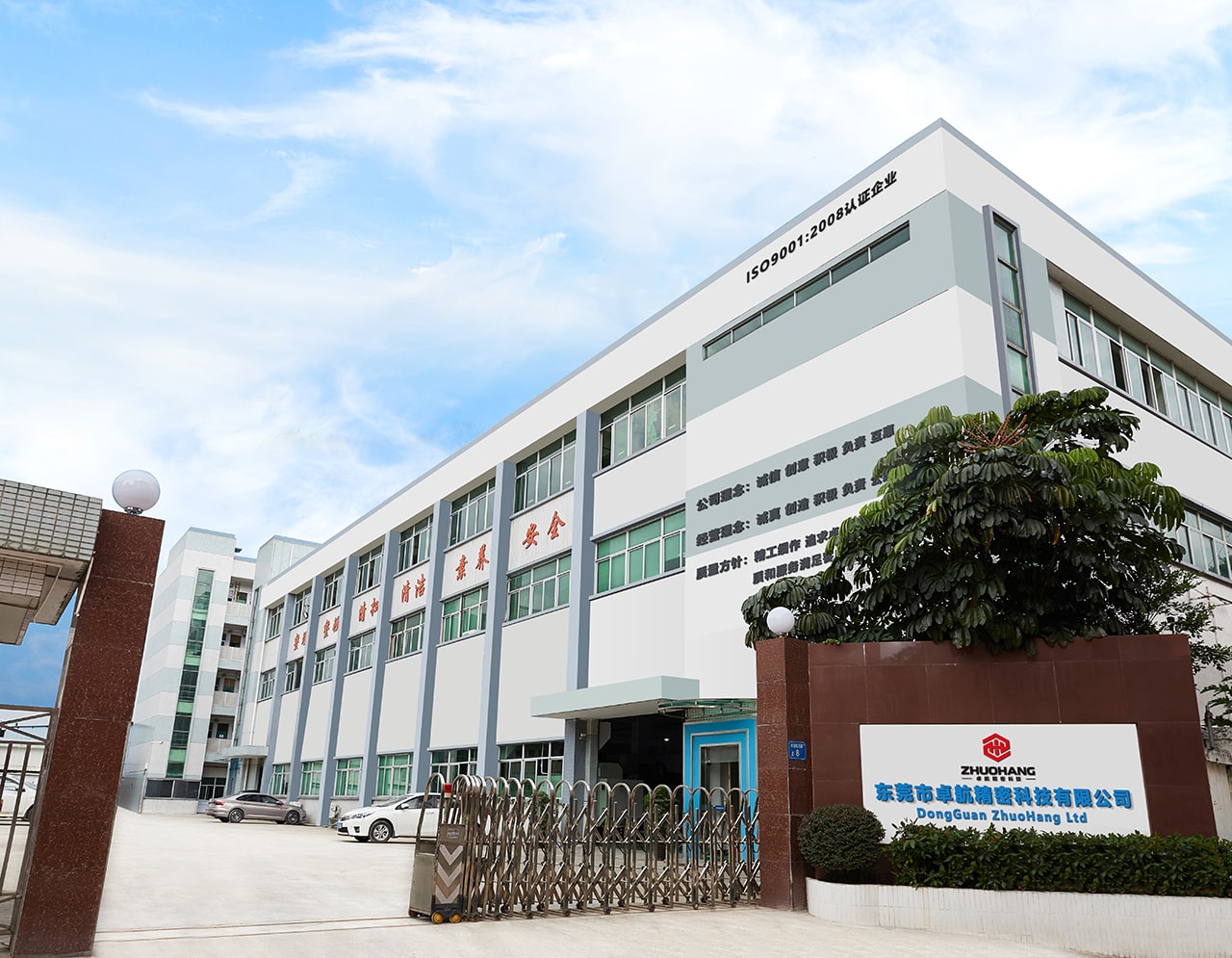
The facility sits at No. 8, Shuibian Songyuan Road, Hengli Town, Dongguan, Guangdong, China 523470 — in the Pearl River Delta. That location matters to a buyer in two concrete ways.
- Supply chain density: the Delta concentrates the raw-material suppliers, finishing partners, and tooling vendors that precision machining depends on, which keeps secondary operations close and lead times short.
- Export infrastructure: Dongguan is served by Shenzhen and Guangzhou ports, so finished parts reach overseas buyers on established freight routes.
The factory is open to visits and audits, and overseas buyers are supported by sales staff who work in English, Portuguese, Spanish, French, and Chinese, and Japanese.
For export work, the practical logistics matter as much as the geography. Parts ship on established freight routes out of Shenzhen and Guangzhou, with export documentation — commercial invoice, packing list, and material certification — prepared in-house so the paperwork matches the physical shipment. The relevant trade term (such as an Incoterms rule like FOB or DAP) is agreed up front, because it determines who owns the freight, the risk, and the import clearance at the far end. If you pin down the Incoterms and the documentation before ordering, you remove the two most common sources of delay at the destination port.
Who will you work with?
Buying machined parts is ultimately a relationship with people, not machines. The day-to-day contact is Felipe Iglesias, the business development director — reachable at [email protected] or +86 13126536955. What matters to you is that the person answering has the technical background to read a drawing and flag a tolerance problem before it becomes a cost, and that conversation is the first thing that happens when a drawing arrives.
The team behind that first conversation spans the languages that matter for export buyers — English, Portuguese, Spanish, French, and Chinese, and Japanese — which removes the translation layer where technical details usually get lost. A tolerance discussion is already dense enough without a language barrier on top of it; being able to talk through a datum or a finish requirement in your own language is a small thing that prevents large, expensive misunderstandings.
What to check before you commit: confirm the machine list is real, ask for a CMM report from a completed job, verify the certificate numbers with the registrar, and ask who owns the secondary operations. A manufacturer answers these in writing; a trading desk deflects. Send a drawing and this shop runs all four checks on itself for you.
What this shop actually runs
If you ask for capability evidence, you deserve a specific answer. This facility operates 100+ CNC machines across 6,800 m2 in Dongguan, China, staffed by 100+ people. The machines, listed by category:
- 5-axis machining centres (10+) - Mazak VARIAXIS I-600 (510/910/510 mm travel, 12,000 rpm, 22 kW, 71.6 N·m, 30-tool BT40) and Mazak INTEGREX I-250H S (B-axis 0.0001°, 24 kW, 124 N·m, 38-tool HSK-A63). Fit for compound-angle parts, single-setup multi-face prismatic work, and aerospace fittings where datum transfer loss is unacceptable.
- 3-axis / 4-axis machining centres (50+) - Brother SPEEDIO S500Z2N / S700Z2N (10,000 rpm, 14/21-tool ATC, 0.7 s tool-to-tool, Z-axis 2.2 G) and Mazak VCE-430A L / VCE-570C L (10,000 rpm, 118 N·m, 24-tool ATC). Fit for prismatic parts, plates, brackets, housings.
- Swiss-type turning centres (10+) - Citizen Cincom A20-3F7 (Φ20 mm, 10,000 rpm), TSUGAMI B0206-III / B0205-III (Φ20 mm, 0.1 µm), STAR SR-32JII / SR-32J Type N (Φ32 mm, 8,000 rpm). Fit for long, slender rotational parts at ±0.002 mm.
- CNC turning centres (20+) - HEADMAN T70M/1250 (720 mm swing, 117 mm bore, 3,000 rpm, BMT75 12-station turret). Fit for shafts, bushings, flanges up to ±0.002 mm.
- Wire EDM (5+) - Sodick AQ535L (550/350/300 mm travel, ±20° taper, 800 kg workpiece). Fit for hardened tool steel, internal splines, sharp internal corners that milling cannot reach.
- Inspection: Hexagon CMM + 20+ gauges - Hexagon CMM for coordinate measurement, plus vision system, profilometer, hardness tester, coating thickness gauge, XRF for material verification. The 10:1 rule (gauge 10x more accurate than the band) is applied to every feature.
- Machine highlights - VARIAXIS I-600: one-setup multi-face 5-axis + MAZA-CHECK auto-calibration; INTEGREX I-250H S: DONE-IN-ONE mill-turn, B-axis 0.0001° + Ai thermal shield; SPEEDIO S500Z2N / S700Z2N: Z-axis 2.2 G + 0.7 s ATC; Swiss-type: guide-bush switchable + 0.1 µm resolution.
Tolerance bands: ±0.003 mm milled, ±0.002 mm turned, ±0.002 mm ground or wire-cut. Capability indices: Ppk >= 1.67 at the initial study; Cpk >= 1.33 ongoing in production.
Certifications: ISO 9001:2015 (116024/A/0001/UK/En) · IATF 16949:2016 (131941/A/0001/SM/En, design clause 8.3 excluded) · ISO 14001:2015 (116024/B/0001/UK/En), held by Dongguan Zhuohang Ltd (USCC 91441900MA4UWT6X39, since 2005).
Service area: we supply Austria, Belgium, the Czech Republic, Denmark, France, Germany, Greece, Hungary, Ireland, Italy, the Netherlands, Spain, Sweden and the United Kingdom in Europe; Brazil, Canada, Mexico and the United States in the Americas; China, Israel, Japan, Singapore and Sri Lanka in Asia; Australia and New Zealand in Oceania; and South Africa in Africa, with worldwide delivery from China.
Contact: Felipe Iglesias, [email protected], +86 13126536955.
Planning a factory visit or audit?
Email [email protected] or call +86 13126536955 to arrange it, or send a drawing for a DFM review first.
Frequently Asked Questions
Who is behind High Precision Machining?
Dongguan Zhuohang Ltd, operating as Zhuohang Precision Machining Factory, founded in 2005 in Hengli Town, Dongguan. The 6,800 m² facility employs 100+ people, with skilled technicians making up 80%+ of the team.
What equipment does the factory run?
100+ production machines including 50+ 3-axis, 20+ 4-axis, and 20+ 5-axis milling centers, 25+ lathes, and 7+ grinders, plus 20+ inspection instruments including Hexagon CMMs.
Where is the factory located?
No. 8, Shuibian Songyuan Road, Hengli Town, Dongguan, Guangdong, China 523470 — in the Pearl River Delta manufacturing region.
Is the factory certified?
Yes. It holds ISO 9001:2015, IATF 16949:2016, and ISO 14001:2015. The IATF 16949 scope excludes product design under Clause 8.3, so the work is build-to-print.
How does the factory keep cost in line?
By matching each feature to the process and tolerance it needs rather than machining everything tight. A design-for-manufacturing review flags over-toleranced features before quoting.
Can I visit or audit the factory?
Yes. Factory visits and audits are welcomed, and overseas buyers are supported by sales staff who work in English, Portuguese, Spanish, French, and Chinese, and Japanese.
What is the minimum order quantity?
One piece. Prototype and single-part orders are accepted alongside production runs, so a design can be validated before volume is committed.
How do I get a quote?
Email a STEP, IGES, or 2D drawing to [email protected]. The team returns a design-for-manufacturing review plus a quote, flagging any over-toleranced features before you commit.
Standards referenced on this page
- ASTM A582/A582M-12 — Standard Specification for Free-Machining Stainless Steel Bars
- ASTM B348/B348M-21 — Standard Specification for Titanium and Titanium Alloy Bars and Billets
- ISO 9001 — Quality management systems — Requirements