
High Precision Machining Parts
Run this decision the way an experienced designer does: classify each feature by what it mates with, then assign the band that function demands, and nothing tighter.
- Load-bearing fits (bearing bores, journals, press fits, seal faces): ±0.002 mm, ground.
- Alignment and locating features: ±0.003 mm (milling) / ±0.002 mm (turning), milled or turned.
- Clearance and cosmetic surfaces: general tolerance, as loose as the design allows.
Cost note: each order of magnitude tighter roughly multiplies cost, because machine time, inspection, and scrap all rise. Flag the two or three features that control function, let the rest ride, and the quote will reflect the part's real worth, not the tightest number on the print.
Which processes run in-house, and why does that matter for tolerance?
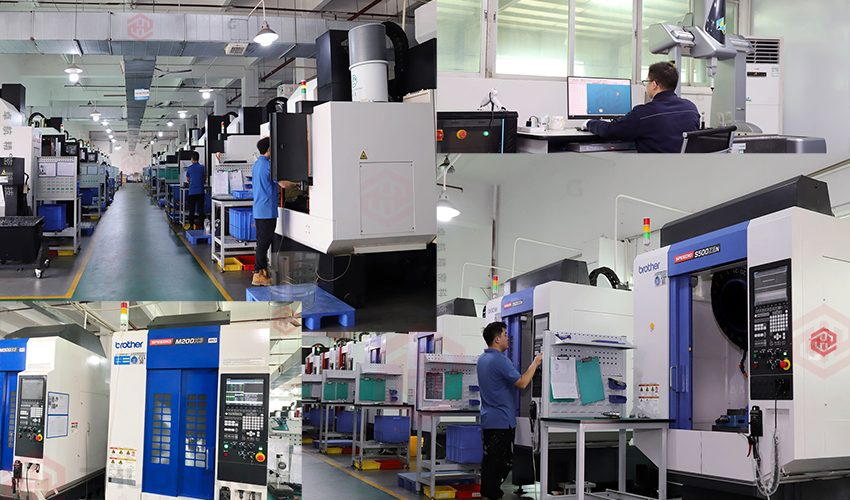
Every hand-off between vendors is a chance for error to creep in, so keeping the metal-cutting range under one roof is itself a tolerance decision. Most parts do not leave the building between operations.
| Process | Capacity | Max workpiece |
|---|---|---|
| 3-axis milling | 50+ centers | 1300 × 700 × 600 mm (milling) |
| 4-axis milling | 20+ centers | |
| 5-axis milling | 20+ centers | |
| CNC turning | 25+ lathes | Ø720 × 1280 mm |
| Mill-turn | Multi-task centers | Single-setup complex geometry |
| Grinding | 7+ (surface / centerless / cylindrical) | ±0.002 mm finishes |
How are parts verified before they ship?
A tolerance that is not measured is a wish, not a specification. Every critical dimension is probed and reported, so the inspection report you receive is the proof of what you bought.
- Hexagon GLOBAL S CMMs (2) for dimensional verification, plus a gear measuring center and vision measuring machines.
- KEYENCE laser microscope and SURFCOM profile/roughness machine for surface finish and form.
- XRF spectrometer for incoming material composition against the mill certificate.
- Hardness, coating thickness, salt-spray, and tensile testers for material and finish properties.
- SPC on key characteristics — Ppk ≥ 1.67 initial critical, Cpk ≥ 1.33 general.
Which certifications back the quality system?
Certificates are the cheapest pre-audit you can run: they confirm a documented, third-party-surveilled system is already in place. The three below are stated with honest scope.
| Standard | Certificate number | Scope |
|---|---|---|
| ISO 9001:2015 | 116024/A/0001/UK/En | Machining of metal parts |
| IATF 16949:2016 | 131941/A/0001/SM/En | Manufacture of CNC metal machining parts (excludes product design, Clause 8.3) |
| ISO 14001:2015 | 116024/B/0001/UK/En | Environmental management related to machining of metal parts |
Honest scope note: IATF 16949 excludes product design under Clause 8.3, which means the work here is build-to-print. If a program requires the manufacturer to own design responsibility, say so up front and the scope is handled accordingly rather than over-promised.
What are the MOQ and lead times?
There is no production minimum — the MOQ is 1 piece, so a design can be prototyped, measured, and revised before volume is committed. Lead time follows part complexity and process-step count, not a blanket promise.
| Complexity | Approx. lead time | Typical profile |
|---|---|---|
| Simple | ~3 days | Few operations, single material, no finishing |
| Standard | ~7 days | Multiple operations, standard tolerances |
| Complex | ~30 days | 10–20 process steps, or surface finishing / heat treatment |
Complex parts can run 10–20 process steps, and any surface finishing pushes a part into the longer tier. State the target date, and the honest answer on whether it holds will follow, not a reassuring guess.
Which secondary operations can be bundled?
Parts ship finished, not as raw blanks. Secondary operations run in parallel or through qualified partners, so there is one invoice and one accountable supplier.
- Surface finishing: standard and hard anodizing, zinc / nickel / silver / gold / chrome plating, powder coating, painting, brushing, mirror polishing.
- Heat treatment: vacuum, bright, carburizing, nitriding, and stress-relief aging through qualified partners. In-house ovens reach 500 °C — fine for aluminum and low-temperature steel stress relief; titanium stress relief above that is outsourced.
- Deburring, tapping, laser marking, and assembly: included as the print requires.
What should you check before placing an order?
Whether you buy here or elsewhere, these questions separate a manufacturer from a trading desk. Ask them of any shop — including this one.
- Can they show the actual machine list, not a stock photo? A manufacturer names models and counts; a reseller recycles brochures.
- Do tolerances come with measurement evidence? Ask for a CMM report or SPC chart from a real job, not a capability statement.
- Is the certificate number verifiable? Real ISO/IATF certificates carry numbers a registrar can confirm.
- Who owns the secondary operations? If anodizing or heat treatment is outsourced, the shop should say so and name the partner.
- Is the design review honest? A shop that flags over-toleranced features before quoting saves more than one that agrees to everything.
Send a drawing and the five checks above are run on this shop, in writing, before any commitment is made.
What DFM rules make a part cheaper to machine to tolerance?
Tolerance is decided on the drawing, but cost is partly decided by geometry that has nothing to do with tolerance. A few design-for-manufacturing habits keep a part cheap to make before a single band is tightened, and they hold in every shop because they follow from tool geometry and material behavior.
- Put a radius in inside corners. A sharp internal corner forces a small, fragile tool and concentrates stress. As a rule of thumb, an internal radius of at least a third of the wall thickness — or the radius of the tool that will cut it — is the practical minimum.
- Watch hole depth. A hole with a depth-to-diameter ratio above about 5 needs special tooling and slower feeds; above about 10, holding position and straightness gets difficult. Deep holes cost more for reasons of physics, not shop pricing.
- Keep walls thick enough to not deflect. A wall thinner than roughly 0.5 mm in aluminum or 1 mm in steel flexes under the cutter, which destroys tolerance no matter what the band says. Beef up the wall or accept a looser number.
- Give blind threads a bottom clearance. A tapped blind hole needs room for the tap, so thread depth must be stated with that clearance in mind — a drawing that specifies full thread to the bottom of a blind hole is asking for a broken tap.
- Design for the datum you actually have. A tolerance is only meaningful measured from a reference, so the surfaces you intend to locate from should be flat, accessible, and stable enough to clamp against.
The compounding effect: DFM and tolerance decisions multiply. A part with a reasonable wall thickness, generous inside radii, and shallow holes can often hold a tighter band for the same cost as a fragile part with a loose band, because the fragile part spends its budget fighting deflection and tool breakage instead of holding size.
What this shop actually runs
If you ask for capability evidence, you deserve a specific answer. This facility operates 100+ CNC machines across 6,800 m2 in Dongguan, China, staffed by 100+ people. The machines, listed by category:
- 5-axis machining centres (10+) - Mazak VARIAXIS I-600 (510/910/510 mm travel, 12,000 rpm, 22 kW, 71.6 N·m, 30-tool BT40) and Mazak INTEGREX I-250H S (B-axis 0.0001°, 24 kW, 124 N·m, 38-tool HSK-A63). Fit for compound-angle parts, single-setup multi-face prismatic work, and aerospace fittings where datum transfer loss is unacceptable.
- 3-axis / 4-axis machining centres (50+) - Brother SPEEDIO S500Z2N / S700Z2N (10,000 rpm, 14/21-tool ATC, 0.7 s tool-to-tool, Z-axis 2.2 G) and Mazak VCE-430A L / VCE-570C L (10,000 rpm, 118 N·m, 24-tool ATC). Fit for prismatic parts, plates, brackets, housings.
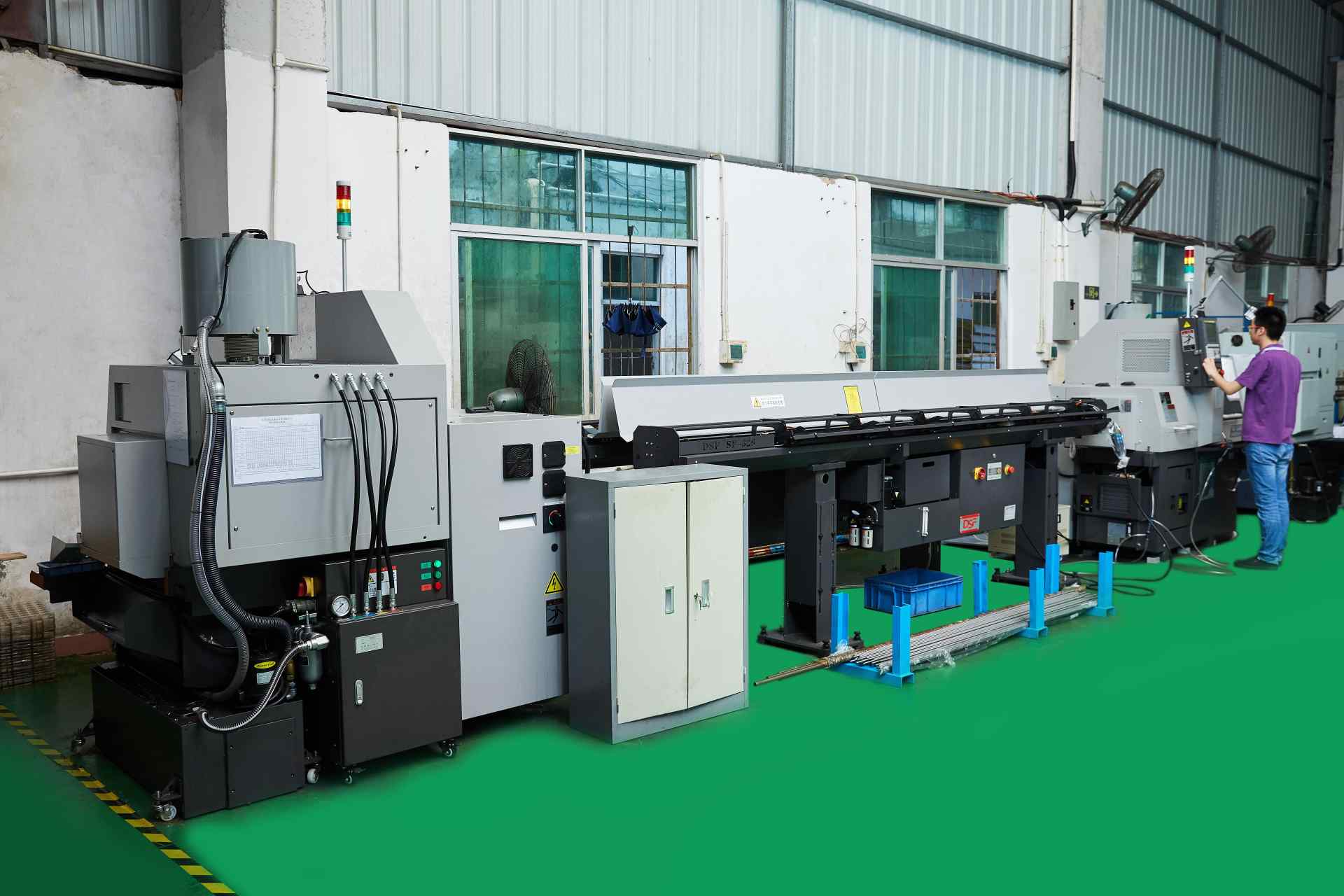
- Swiss-type turning centres (10+) - Citizen Cincom A20-3F7 (Φ20 mm, 10,000 rpm), TSUGAMI B0206-III / B0205-III (Φ20 mm, 0.1 µm), STAR SR-32JII / SR-32J Type N (Φ32 mm, 8,000 rpm). Fit for long, slender rotational parts at ±0.002 mm.
- CNC turning centres (20+) - HEADMAN T70M/1250 (720 mm swing, 117 mm bore, 3,000 rpm, BMT75 12-station turret). Fit for shafts, bushings, flanges up to ±0.002 mm.
- Wire EDM (5+) - Sodick AQ535L (550/350/300 mm travel, ±20° taper, 800 kg workpiece). Fit for hardened tool steel, internal splines, sharp internal corners that milling cannot reach.
- Inspection: Hexagon CMM + 20+ gauges - Hexagon CMM for coordinate measurement, plus vision system, profilometer, hardness tester, coating thickness gauge, XRF for material verification. The 10:1 rule (gauge 10x more accurate than the band) is applied to every feature.
- Machine highlights - VARIAXIS I-600: one-setup multi-face 5-axis + MAZA-CHECK auto-calibration; INTEGREX I-250H S: DONE-IN-ONE mill-turn, B-axis 0.0001° + Ai thermal shield; SPEEDIO S500Z2N / S700Z2N: Z-axis 2.2 G + 0.7 s ATC; Swiss-type: guide-bush switchable + 0.1 µm resolution.
Tolerance bands: ±0.003 mm milled, ±0.002 mm turned, ±0.002 mm ground or wire-cut. Capability indices: Ppk >= 1.67 at the initial study; Cpk >= 1.33 ongoing in production.
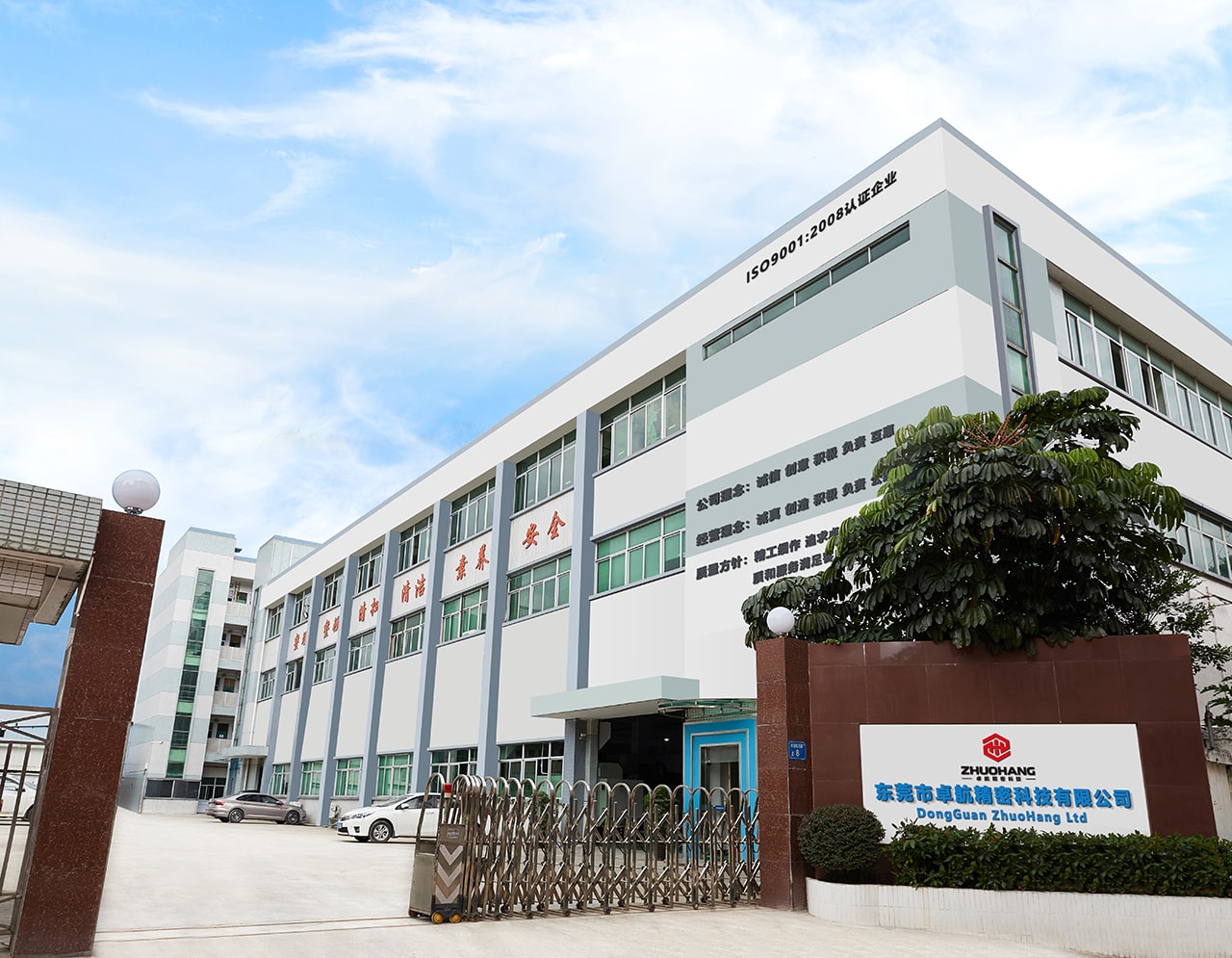
Certifications: ISO 9001:2015 (116024/A/0001/UK/En) · IATF 16949:2016 (131941/A/0001/SM/En, design clause 8.3 excluded) · ISO 14001:2015 (116024/B/0001/UK/En), held by Dongguan Zhuohang Ltd (USCC 91441900MA4UWT6X39, since 2005).
Service area: we supply Austria, Belgium, the Czech Republic, Denmark, France, Germany, Greece, Hungary, Ireland, Italy, the Netherlands, Spain, Sweden and the United Kingdom in Europe; Brazil, Canada, Mexico and the United States in the Americas; China, Israel, Japan, Singapore and Sri Lanka in Asia; Australia and New Zealand in Oceania; and South Africa in Africa, with worldwide delivery from China.
Contact: Felipe Iglesias, [email protected], +86 13126536955.
Ready to get your parts machined to the tolerance they need?
Send your drawing to [email protected] or call +86 13126536955 for a DFM review and quote.
Frequently Asked Questions
What tolerances can your machined parts hold?
±0.003 mm on CNC milling, ±0.002 mm on CNC turning, and ±0.002 mm for precision grinding. Critical dimensions are verified on Hexagon CMMs, with key characteristics held to Ppk ≥ 1.67 initial.
Which metals do you machine into parts?
Aluminum, stainless steel, brass, copper, titanium, and magnesium, plus engineering plastics. Incoming material is checked by XRF against its mill certificate before cutting.
What is your minimum order quantity?
One piece. Prototype and single-part orders are accepted alongside production runs, so a design can be validated before volume is committed.
How do I avoid over-tolerancing my part?
Tighten only the features that control function, and leave the rest at a general tolerance. Sending a 3D model plus a toleranced 2D drawing lets the manufacturer flag which dimensions are driving cost.
What are your typical lead times?
Roughly 3, 7, or 30 days depending on part complexity and the number of process steps. Simpler parts ship in about 3 days; parts with surface finishing fall into the longer 30-day tier.
Are you certified?
Yes. The facility holds ISO 9001:2015, IATF 16949:2016, and ISO 14001:2015. The IATF 16949 scope excludes product design under Clause 8.3, so the work is build-to-print.
Can you bundle surface finishing and heat treatment?
Yes. Anodizing, plating, powder coating, painting, brushing, and polishing can be bundled, along with heat treatment through qualified partners. The in-house ovens reach 500 °C.
How do I get a quote?
Email a STEP, IGES, or 2D drawing to [email protected]. The team returns a design-for-manufacturing review plus a quote, flagging any over-toleranced features before you commit.
Standards referenced on this page
- ASTM B211/B211M-19 — Standard Specification for Aluminum-Alloy Rolled or Cold Finished Bar, Rod, and Wire
- ASTM B348/B348M-21 — Standard Specification for Titanium and Titanium Alloy Bars and Billets
- ISO 9001 — Quality management systems — Requirements