
High Precision Machining vs Alternatives: Which Material-Process Pair Wins Your Part
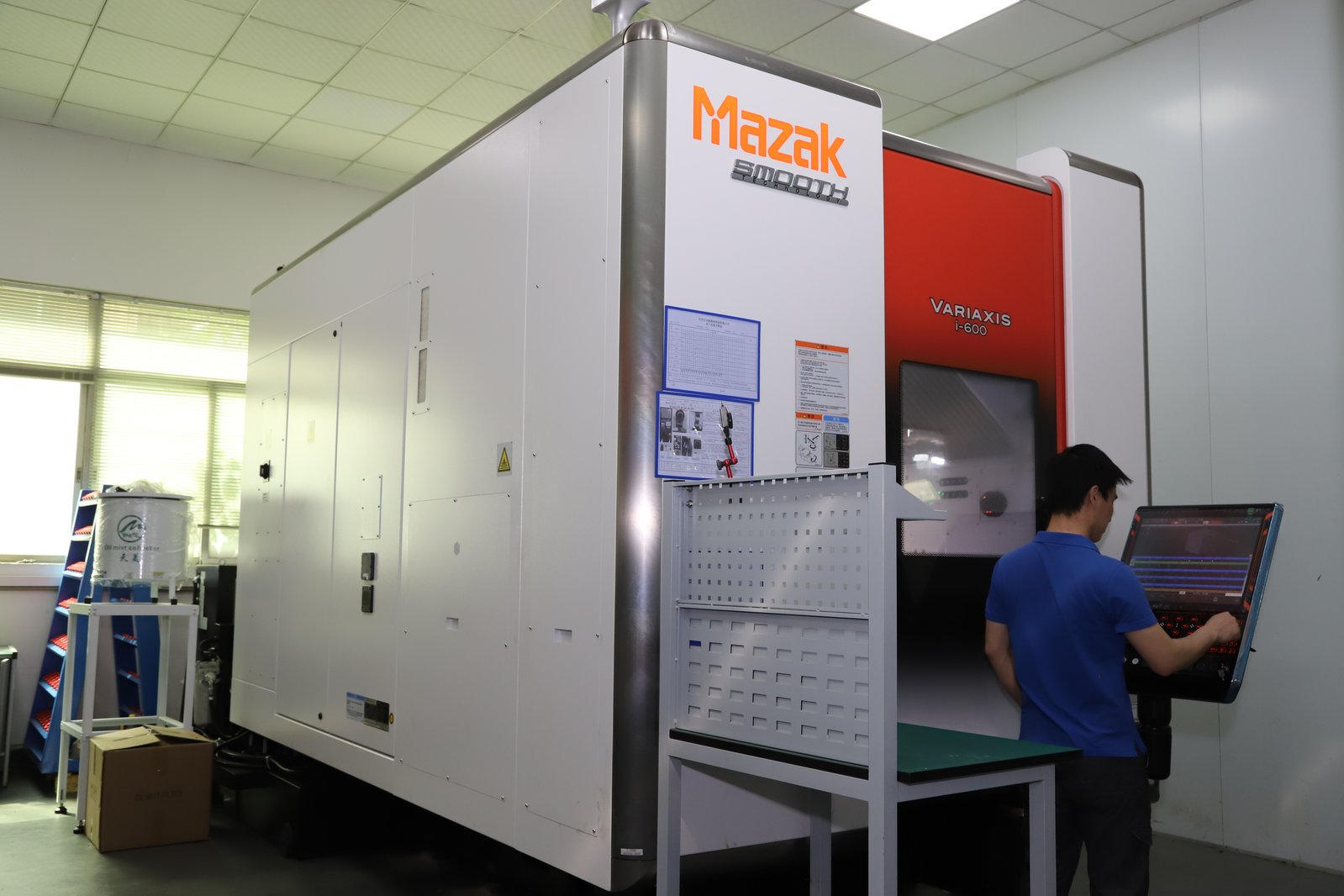
"Should this part be high precision machined, cast, forged, printed, or molded?" is the wrong first question, because the correct answer is already written on your drawing. Every feature carries a tolerance band, and the tightest functional band on the print is the gate that admits or eliminates alternative processes before price is ever discussed. A bearing seat held to ±0.003 mm and ground to ±0.002 mm will not survive die casting, metal additive, or plastic molding as they come off the process; it survives because machining produces it, or because the other process shapes the body while machining finishes that one feature. That hybrid arrangement, a near-net blank carrying the shape and CNC carrying the tolerance, is the real answer for most precision parts. This guide sets up the tolerance gate, runs each alternative process against it, and shows how to route a part to the material-process pair that genuinely fits.
Why does the tightest tolerance on the drawing decide which alternatives even qualify?
Every process that makes a metal or plastic part has a precision ceiling — a band below which the process physically cannot hold, no matter how careful the operator is. High precision machining holds ±0.003 mm as a routine band on milled and turned features, and ±0.002 mm on precision-ground surfaces, with key characteristics charted to Ppk ≥ 1.67 initial and verified on coordinate measuring machines rather than trusted to the machine. For the meaning of those numbers on a real drawing, quote, and inspection report, start with the guide to what "high precision" must mean on your drawing. The processes competing for the same part produce shape by different mechanisms — molten metal filling a cavity, a hammer or press forming a solid billet, layers of fused powder, a resin shrinking inside a mold — and each mechanism sets its own ceiling.
The consequence is a simple elimination rule. Read the drawing and find the tightest feature that actually functions: the bearing bore, the seal face, the press-fit diameter, the datum that locates everything else. If that feature sits inside ±0.05 mm or tighter, most alternative processes are out as the final step — the feature will be machined, either from solid stock or on a part the alternative process shaped first. If the tightest functional feature is ±0.1 mm or looser, or the general tolerance block governs everything, then the process conversation opens up and the decision moves to volume and geometry. The tolerance band speaks before the sales sheet does, which is why any comparison that omits the tolerance column is comparing nothing. For how the band maps to machine, process, and measurement — and how a general standard like ISO 2768 compares — the home page tolerance walk-through is the reference this routing decision sits on top of.
What precision ceiling does each alternative process actually carry?
Run the alternatives against the gate, and their honest bands come into focus. Directional numbers, because the exact figure depends on material, size, and tooling, but the order of magnitude is stable and that is what decides:
- Die casting reproduces the cavity faithfully, so part-to-part repeatability is good, but the absolute position of every feature is set by a tool that shrinks with heat and wears with use, and draft angles are required for release. As-cast tolerance typically lands a few hundredths of a millimeter from nominal at best, and drifts looser across the parting line. A ±0.003 mm bore on a die-cast body is not produced by the die; it is produced after the body comes out of it.
- Metal additive manufacturing (DMLS, SLM, EBM) fuses powder layer by layer, so geometry grows in the Z direction with residual stress, thermal distortion, and a layered surface. As-built tolerance is measured in hundredths of a millimeter and worsens as the part gets larger; as-built surface finish lands at Ra values in the single-digit micron range. Features that must seal, carry a bearing, or hold a thread need machining after the build, or they are not precision features at all.
- Injection molding is governed by resin shrinkage, which differs by polymer and by wall thickness, and by the tool steel wearing over hundreds of thousands of cycles. A molded feature that functions at ±0.05 mm on a stable, well-controlled tool is doing well; a molded seal face or press-fit bore that must hold ±0.003 mm is not realistic without a machining step afterward.
- Sheet-metal forming cuts, bends, and forms thin material, and every bend carries springback and elongation that no two parts reproduce identically. Features within one flat, laser-cut surface can be held tight; features across a bend or across multiple formed surfaces cannot carry a machining tolerance block. The formed envelope is where sheet metal wins; the precision interface, if there is one, is machined or fastened afterward.
- Forging and casting as near-net blanks are not finish processes at all. They deliver an engineered grain structure (forging) or an internal geometry that cutting tools cannot reach (casting), at a material cost far below hogging the same shape from a solid block. Their as-forged and as-cast geometry is deliberately coarse — measured in tenths of a millimeter and up — because the blank is only the first act. The second act, machining the datum faces and critical features, is where the part becomes precise.
The pattern is not that one process is "better" than machining. It is that every alternative has a ceiling, and the ceiling sits well above the bands high precision machining runs every day. When the drawing calls for the tight bands, the alternative process cannot be the finish process — it can only be the shape maker.
When does an alternative process genuinely win the whole part?
An alternative wins the part outright only when the tolerance gate is wide open and volume is real. Three conditions have to be true at once:
- No feature functions tighter than roughly ±0.05 mm. If the tightest callout on the print sits in the hundredths band or on the general tolerance block, the drawing does not actually demand precision machining — it demands shape at low cost.
- Volume is high enough to amortize a tool. Tooling-heavy processes need sustained production. The crossover where a die or mold begins to justify itself sits in the several-thousand to tens-of-thousands range for most parts; below that, the tool cost swamps the per-part saving and machining from solid is the honest route. Low-volume precision work, from one prototype to a few hundred parts, stays with machining because there is no tool to amortize.
- Geometry is stable and suited to the process. A thin-wall housing with uniform walls, draft-friendly sides, and a cosmetic exterior belongs to die casting; a flat or folded enclosure with light loads belongs to sheet metal; a printed internal channel that a cutter cannot reach belongs to additive. When the geometry fights the process — thick sections a caster cannot feed, walls too thin for draft, an internal passage that must be machined anyway — the "win" disappears.
Even when all three conditions hold, check the second-order effects. Die-cast porosity appears where a machining step later opens a thick section. A molded part warps if wall thickness varies and the resin shrinks unevenly. A printed part carries residual stress that can relieve itself on the bench. The processes win the shape; they do not automatically win the precision, and a buyer who assumes otherwise finds the tolerance on the floor between process and promise.
Which features pull a part back to machining at any volume?
The reverse gate is equally decisive. Certain features defeat every alternative process at any quantity, because the alternative cannot reach the band and no amount of volume fixes that:
- Ground surfaces at ±0.002 mm — bearing seats, journals, and seal faces. Grinding removes material in micron-sized increments under thermal control; no cavity, die, or print step produces this band. The feature is ground, or it does not meet the drawing.
- Precision features at ±0.003 mm on milled or turned geometry — press-fit diameters, locating bores, sealing faces, datum structures that mate with another part. These are everyday machining, and they are what the CMM verifies against the model before the batch ships.
- Long, straight, or thin-walled geometries that distort under forming or cooling — a long shaft, a thin plate that must stay flat, a feature whose position relative to another is critical. Machining from solid stock keeps the datum structure intact because the part is cut where the tolerance lives, not formed and then hoped straight.
- Material the alternative process cannot run. When the drawing names an alloy outside a process's material window, the decision is made by the material list, not the brochure. Most metals machine; not all metals cast, forge, print, or mold well. If the functional material is 17-4 PH H900, titanium Grade 5, or a difficult stainless, machining is often the only process that can hold both the alloy and the band.
- Small quantities of anything. At one to a few hundred pieces, no tool pays for itself, and lead time favors a process that needs no tool at all. Machining ships first parts in days from a CAD model; a die or mold is weeks away and only gets cheaper when it runs for years.
This is why high precision machining is not displaced by its alternatives — it is the process the alternatives hand off to whenever a feature functions tight. What changes with volume is how much of the part machining must make from scratch.
Why is the hybrid route — a near-net blank finished by CNC — the answer precision buyers keep arriving at?
Set the two gates side by side and the picture resolves. The tolerance gate says the tight features must be machined. The volume and geometry gates say a tooled or formed process can make the rest of the part cheaper and often stronger. Both are true at once, which is why the mature answer is not "machining or the alternative" but "the alternative makes the shape, machining makes the precision":
- Forged blank, CNC-finished — a pump body or a suspension component is forged for grain flow that follows the load path, then the mating faces, bores, and datum structure are machined. The forging carries the strength; the machining carries the ±0.003 mm band where parts actually meet.
- Die-cast or investment-cast body, CNC-finished — a housing is cast with thin walls and internal cavities that would cost a fortune to mill from solid, then the bearing bosses, sealing faces, and bolt patterns are machined. The casting carries the envelope; the machining carries the function. Watch porosity when post-machining opens cast sections, and draft the design so machined features land on surfaces that exist.
- Extruded profile, CNC-finished — a long aluminum section is extruded to the cross-section, then the ends, holes, and locating faces are machined. The extrusion carries the constant shape; the machining carries the length tolerances and the interfaces.
- Printed body, CNC-finished — an additive part with internal conformal channels that no cutter can reach is printed near-net, stress-relieved, then its datum planes and sealing features are machined on the CNC floor. The print carries the geometry no cutter can reach; the machining makes the part locatable, sealable, and ready to assemble.
- Molded body, CNC-finished — a plastic enclosure is molded at volume, and the few features that must function precisely — an insert bore, a sealing seat, a press-fit pocket — are machined or fitted after molding. The mold carries the thousand copies; the machining carries the two that matter.
From the buyer's chair the hybrid has one practical consequence worth planning for: it adds a supplier handoff. The blank comes from a caster, forger, extruder, or printer; the finishing comes from the CNC floor; and the tolerance is only as good as the blank the machine receives. That is why the CNC side of the pair should be asked directly whether it accepts customer-supplied or vendor-supplied blanks, what datum features it expects the blank to carry, and what inspection it runs when the blank arrives. A warped or oversized blank quietly destroys the precision the machining is supposed to add. It is also why the verification step matters as much as the cutting step: which tolerance and finish claims your own gauges can confirm on arrival, and which need the CMM report, is covered in the guide to realistic tolerances and surface finishes.
Which material-process pairing does the tolerance gate leave standing? A decision table by band
The table below routes a part by the thing that decides first — the tolerance band its functional features demand — then layers volume and geometry on top. Read your drawing, find the tightest band that functions, and enter on that row. The pair named in the middle column is the starting point; the right column is the condition that keeps it honest.
| Tightest functional tolerance on your part | Material-process pair that wins | What keeps the pair honest |
|---|---|---|
| General block only, no feature tighter than about ±0.1 mm; shape and cost dominate | Low volume: CNC machining from plate or bar in the production alloy. High volume: die-cast aluminum/zinc, injection-molded plastic, or sheet-metal fabrication depending on geometry | Read the general tolerance before assuming it is loose — an ISO 2768 fine class on short dimensions still sits near ±0.1 mm, and any feature that functions tighter moves the part down this table |
| ±0.05 mm class features, one or a few per part | Near-net blank (casting, forging, or extrusion) plus CNC finishing of the tight features, or full CNC from solid at lower volume | The tight features must be machined; draft and porosity live in the formed body, so locate the tight features where the blank gives clean material |
| ±0.003 mm machining band — press fits, locating bores, sealing faces | CNC milling and turning from solid stock, or from a near-net blank where the blank economics are real; every tight feature machined and CMM-verified | This is the facility's daily band; a drawing full of ±0.003 mm callouts is a drawing that machining from solid will price honestly, and a blank only helps if the tight features sit on machinable surfaces |
| ±0.002 mm ground features — bearing seats, journals, seal faces | CNC plus precision grinding on the ground features, from solid or from a blank that first shaped the rest | Grinding with thermal control is the only route to the band; the surrounding machining must reference the ground features so the datum structure survives |
Two readings of the table are worth stating plainly. First, nothing in it lets an alternative process finish a tight feature — the tolerance column decides that, and it decides before the quantity column. Second, almost every hybrid row still ends in a machining step, and the machining is not an afterthought bolted onto a cheaper process. It is the step that turns a shape into a part that fits, seals, and locates, which is the definition of precision the whole site is built on. When volume and geometry genuinely point to a cast, forged, extruded, printed, or molded body, the buying question becomes: who machines the features the body cannot hold?
What belongs on the RFQ so the tolerance gate and the pair are actually priced?
A quote is only as precise as the RFQ it answers, and on hybrid work most quote-to-quote chaos comes from the pair going unnamed. State the route on the RFQ in five lines and the quotes will finally describe the same part. Name the material grade and condition — 6061-T6, 17-4 PH H900, 316L annealed — because condition changes both machinability and cost. State the annual and total quantity, because that is the number that decides whether a tool belongs in the discussion at all. Mark the precision-critical features and their bands — the ground journal at ±0.002 mm, the locating bore at ±0.003 mm — and say that everything else rides the general block. Name the blank process and the finish process separately: "die-cast A380 body, then CNC machine the bearing bosses and seal face" is an instruction the quoting shop can act on; "casting" is a guess. And write the verification you will accept: CMM report for the tight features, material certification at receiving, and the capability evidence behind any Cpk claim.
For a part headed down the hybrid path, add one more line: which features the CNC floor must reference as datums and which surfaces the blank supplier must keep clean and oversized for machining. A blank with no machining allowance on the features that need it is a blank that has already spent its savings. When the RFQ names the pair, the band, and the verification, the machining half of the pair can quote the precision, and the blank half can quote the shape, and the part that arrives is the one both halves promised.
Frequently Asked Questions
How much tighter are machined bands than what die casting, molding, or 3D printing can hold?
High precision machining holds ±0.003 mm on milled and turned features and ±0.002 mm on precision-ground surfaces. Die casting, injection molding, and metal additive typically hold their tightest features only to a few hundredths of a millimeter — looser still as size grows — with draft, shrinkage, and layer effects limiting them further. Any feature that functions tighter than those bands ends up machined regardless of the process that made the body.
At what volume do die casting and injection molding undercut machining on cost?
When the tool can be amortized — sustained volume in the several-thousand to tens-of-thousands range — and when the part's tightest functional features sit at ±0.05 mm or looser. Below that volume, no tool pays for itself and machining from solid is the honest route. Above it, the formed body wins on shape and cost, and the tight features are still machined afterward.
Is a metal 3D-printed part ever high precision on its own?
Only where machining finishes the precision. As-built additive tolerance and surface finish land well outside the ±0.003 mm and ±0.002 mm bands, so a printed bearing seat, seal face, or thread needs machining after the build. The mature pattern is a printed body for geometry a cutter cannot reach, with the datum and sealing features machined on the CNC floor.
If the body is cast, forged, or printed, why does a machining step still follow?
Because shape and tolerance are different deliverables. The forming process delivers the envelope — the grain flow, the internal cavity, the thin wall — at bands measured in tenths of a millimeter. Machining delivers the functional precision: the ±0.003 mm bore, the ±0.002 mm ground seat, the datum structure that makes the part locatable and measurable. One process makes the part look right; machining makes it fit, seal, and repeat.
Does the facility accept cast, forged, or extruded blanks for finishing?
Yes — the floor routes each feature to the process that matches its band, and a near-net blank arriving at the door is inspected for datum surfaces, machining allowance, and material certification before the tight features are cut. Say "blank plus finish" on the RFQ and the quote will price the pair instead of guessing at it.
How do I know whether my part should be machined from solid or routed through a hybrid?
Find the tightest functional tolerance on the drawing and count the annual quantity. If the tightest feature is ±0.003 mm or tighter, that feature is machined no matter what made the body, and whether the rest of the part should be a near-net blank is a volume and geometry question, not a precision question. Send the drawing and the quantity and the gate can be run on the actual part.
Do you offer die casting, injection molding, or 3D printing alongside the machining floor?
No — the facility runs CNC milling, turning, grinding, and wire EDM on a precision floor. That is deliberate: the tight features this site is about are machined and CMM-verified under one roof. For a part whose body should be cast, forged, extruded, or printed, the honest route is a named blank supplier plus this floor doing the finishing — the pair priced and inspected as one program.
Which tolerance band on your drawing should decide the process route, and is a near-net blank worth quoting at your volume?
Email the print and your annual quantity to [email protected] or call +86 13126536955. You will get a straight answer on which features force machining, where a cast, forged, or printed body genuinely saves money, and how to write the RFQ so every quote prices the same pair.